The case in 30 seconds
The problem
Franchisees managed orders and stock with manual processes and spreadsheets, with data scattered across local systems. The result was excess inventory, stockouts and sales forecasts that missed, especially during promotions.
My role
Product Designer on M.A.R for a year and a half, running continuous discovery with franchisees and designing the tool from research to rollout.
The outcome
A replenishment tool that centralizes store data and suggests each order: less excess stock, fewer stockouts, less manual work and happier franchisees.
excess inventory
time on manual processes
franchisee satisfaction
stockouts
Restocking a franchise network
M.A.R (Modelo de Abastecimento da Rede, the network replenishment model) was created to transform order and inventory management in Grupo Boticário's franchise stores.
The need came from the franchisees themselves: each store has its own sales rhythm, and keeping up with it depended on manual work.
Spreadsheets, guesses and scattered data
Many franchisees relied on manual processes and spreadsheets to manage orders and stock, which led to errors and wasted time. Without proper tools, it was hard to analyze data and make informed decisions.
Stores often carried too much stock, a high cost with a risk of products going obsolete, while sales forecasts missed, especially during promotions, causing losses or stockouts. Data lived in different local systems and formats, so nobody had the full picture.
How might wemake replenishment accurate and fast for every store, without adding work for the franchisee?
Continuous discovery with franchisees
Instead of one research phase at the start, discovery ran alongside delivery for the whole project, so the solution stayed aligned with the stores as their needs changed.
Frequent interviews and co-creation
Regular interviews gathered the problems franchisees faced and the features they wanted, and franchisees took part in shaping the solutions.
Prototypes tested with users
Prototypes built from interview insights were tested continuously with franchisees and adjusted before development.
Data to find patterns
Operational and sales data revealed patterns and opportunities that interviews alone would miss.
What guided the design
Centralize before automating
Bringing stock, sales and orders into one place gave franchisees a single view of each store and made automation possible, cutting operational errors.
Integrating data from different local systems takes time before any visible feature ships.
Suggest the order, let the franchisee decide
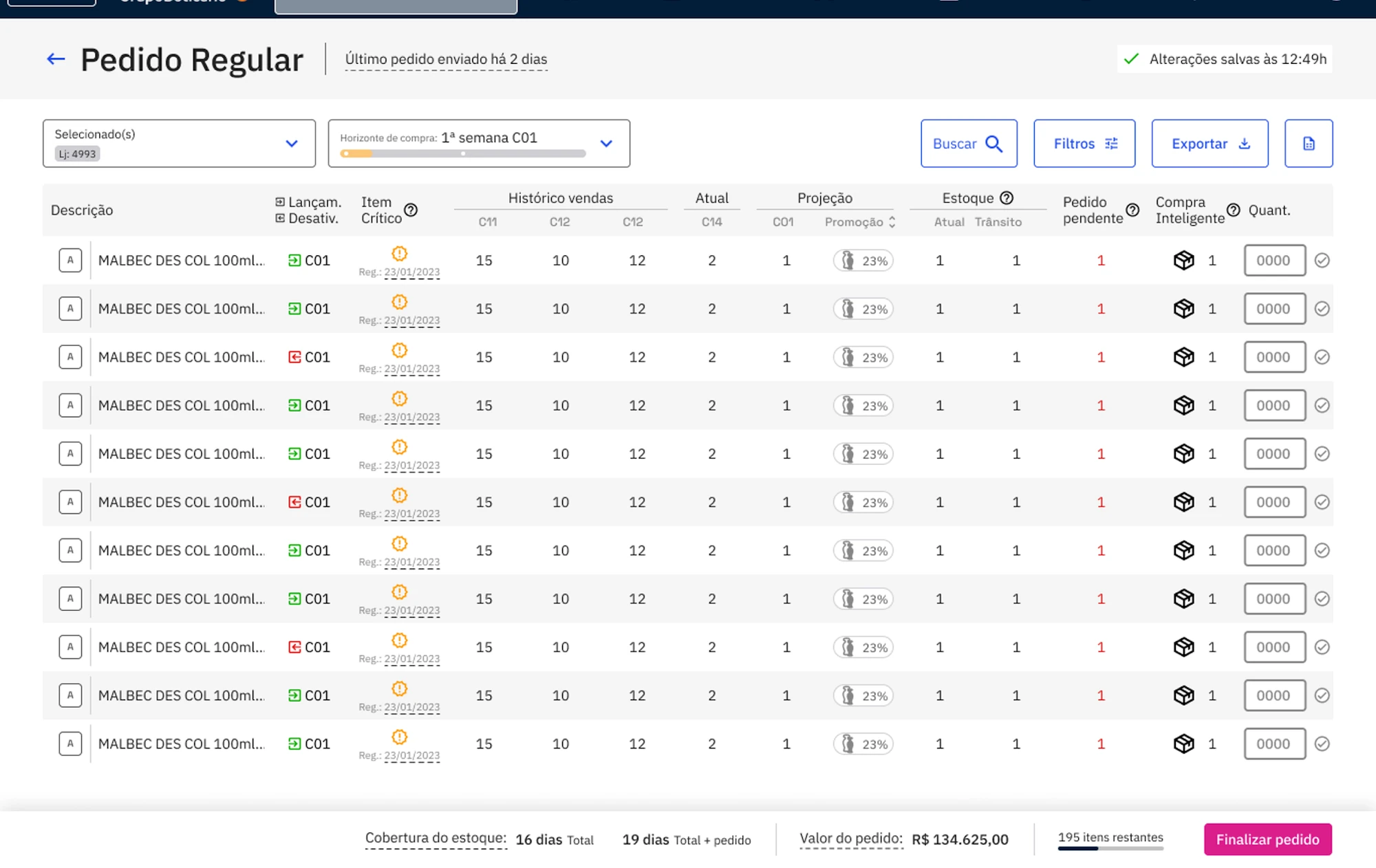
Sales forecasts become a suggested quantity for every product, next to its sales history, current stock and projection, so the order is right without guesswork.
Early forecasts were less accurate than expected, so the model kept being tuned with more history and conversations with users.
Keep franchisees in the loop
Continuous feedback kept the tool aligned with real needs and raised engagement with the new way of ordering.
Adoption was slower than expected and needed extra training and personalized support.
From welcome page to working tool
The redesign turned a generic welcome page into a working dashboard and gave each step of replenishment its own screen.
A home that shows the store
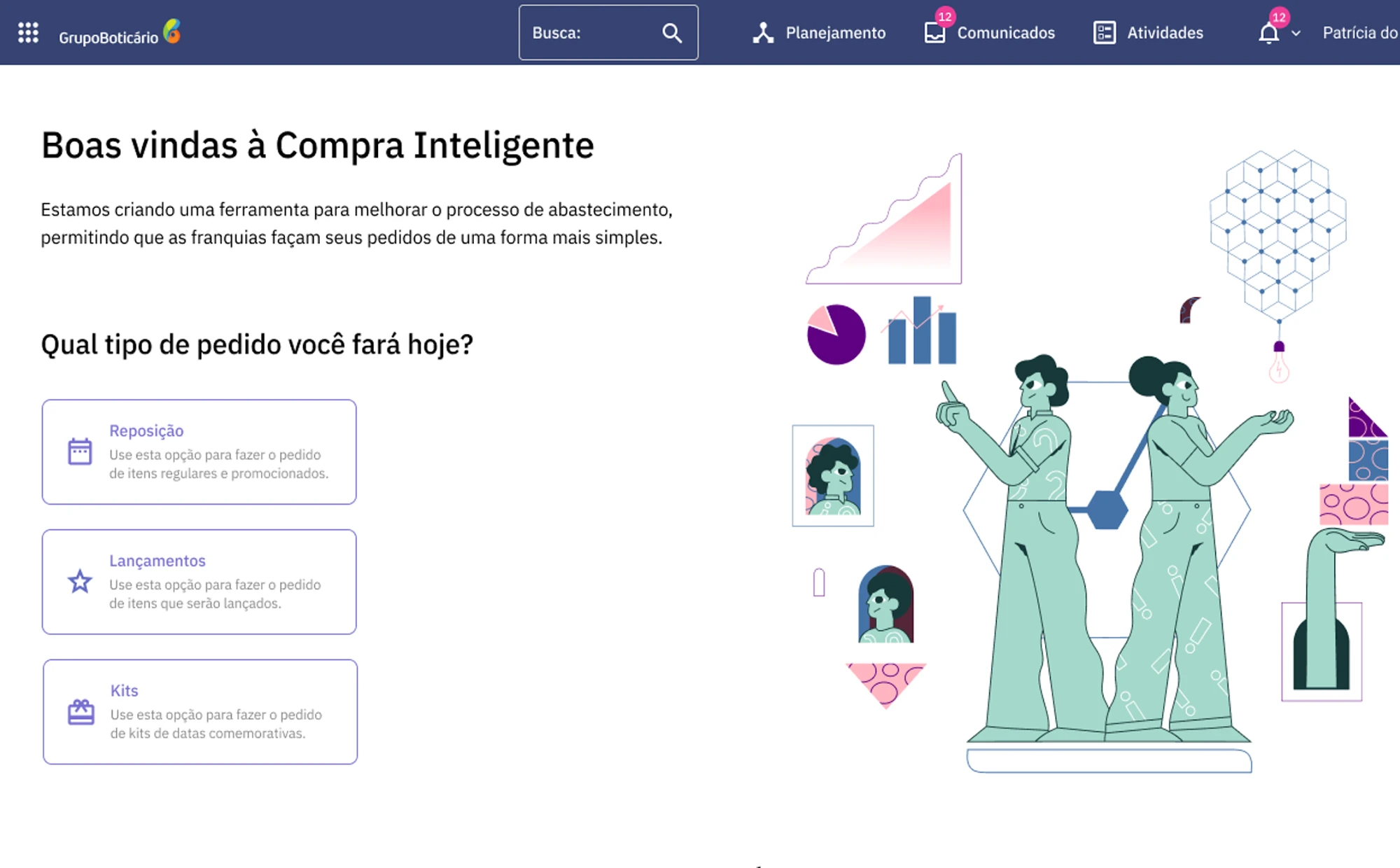
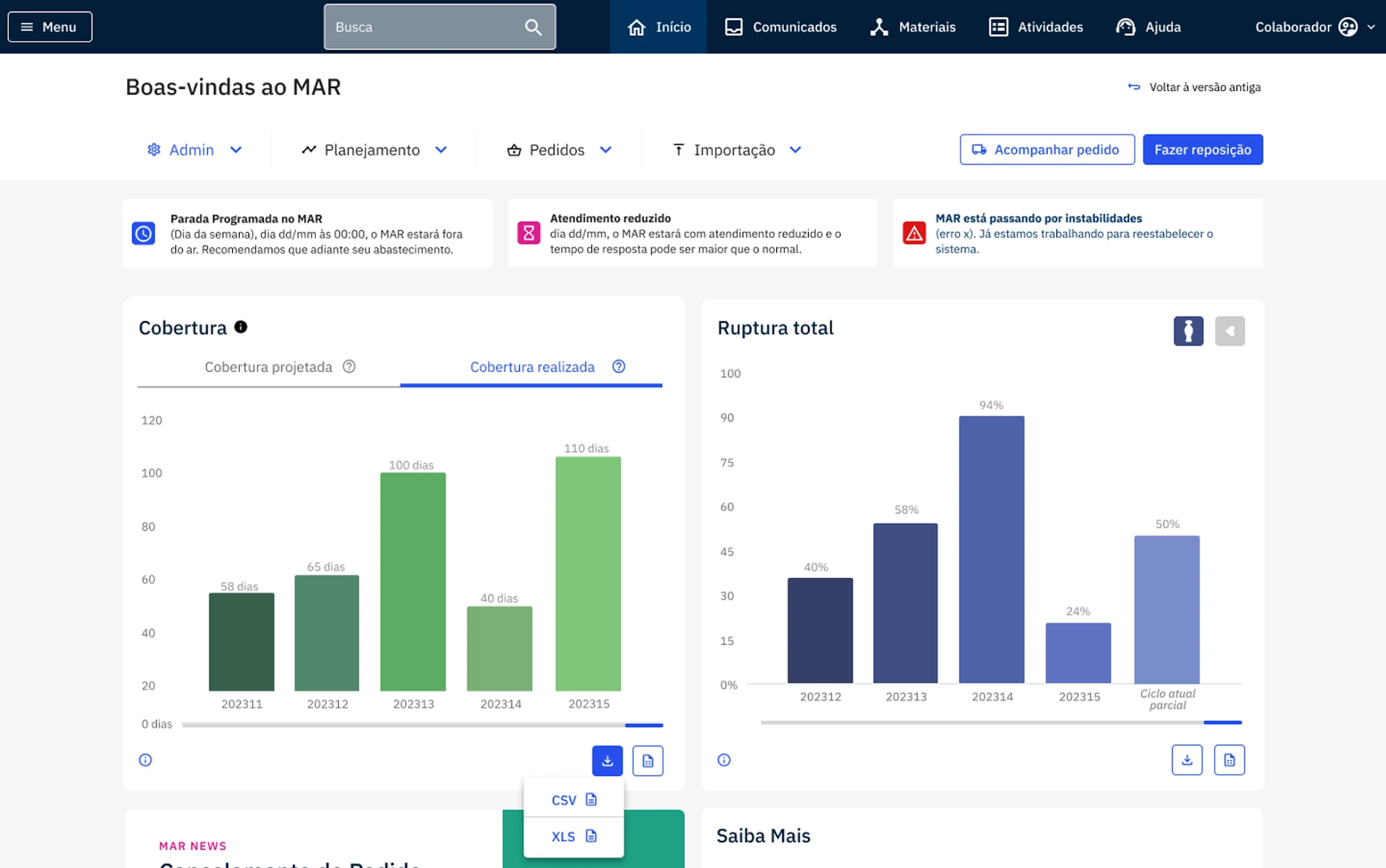
The old home asked which kind of order to place. The new one opens on stock coverage and total stockouts per period, with announcements and help alongside.
Order analysis
The regular order lists every product with its sales history, current stock, projection and suggested quantity, with the store coverage in days and the order value always in view.
Order tracking
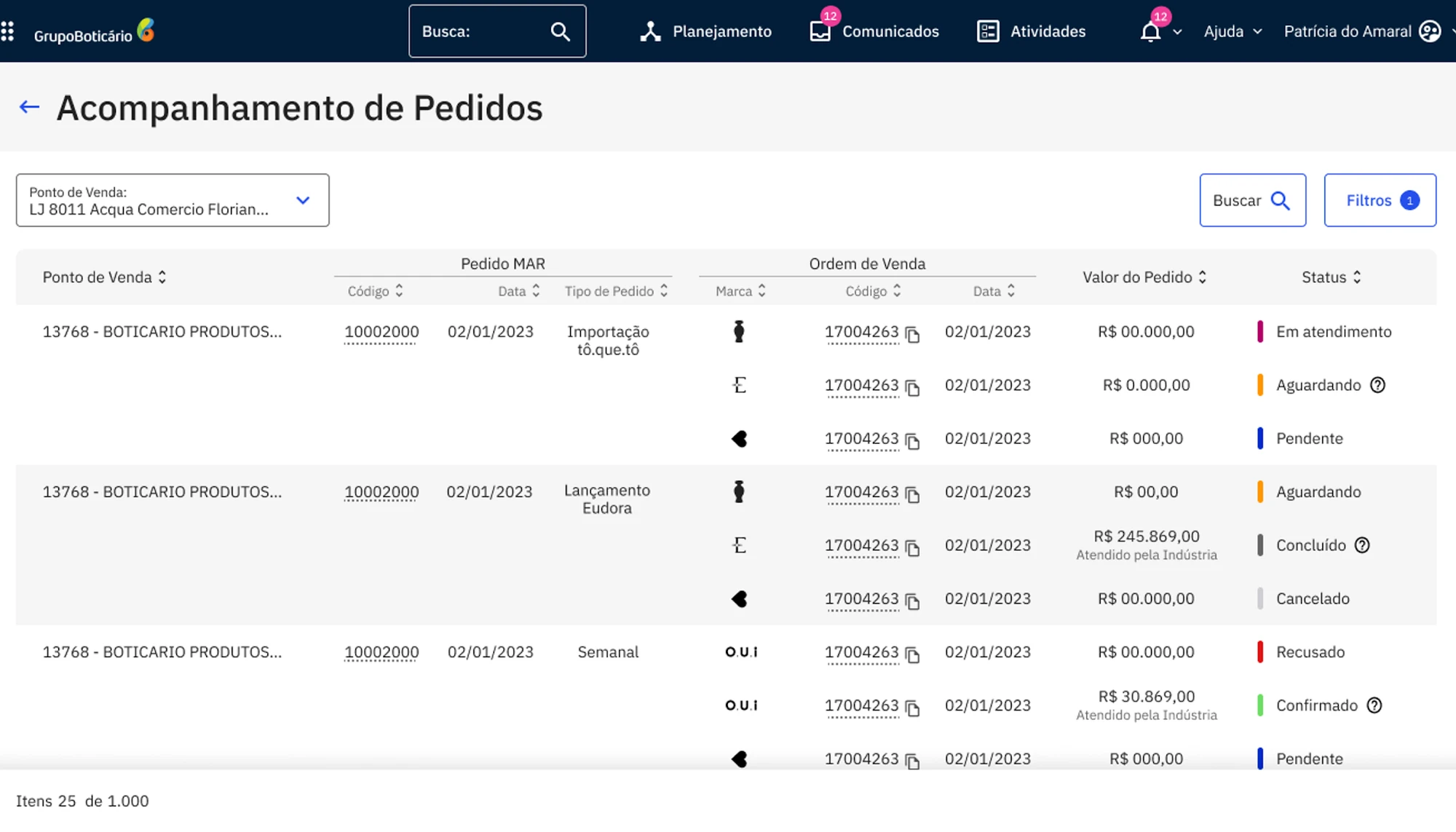
Franchisees follow each order from the M.A.R request to the sales order, with its value and status in one list.
Leaner stock, less manual work
excess inventory
time on manual processes
franchisee satisfaction
stockouts
A centralized inventory system and better transfers between stores cut excess stock. Automation replaced manual steps. Constant monitoring of forecasts and replenishment reduced stockouts, and keeping franchisees involved raised their satisfaction.
What I'd do differently
- 01Plan training from day one. Adoption was slower than expected; detailed materials and onboarding sessions would have helped franchisees earlier.
- 02Give forecasts more variables. Early predictions missed, and more historical data and continuous learning were what improved them.
- 03Open communication channels early. Regular updates between the team, franchisees and stakeholders avoid gaps that slow everything down.